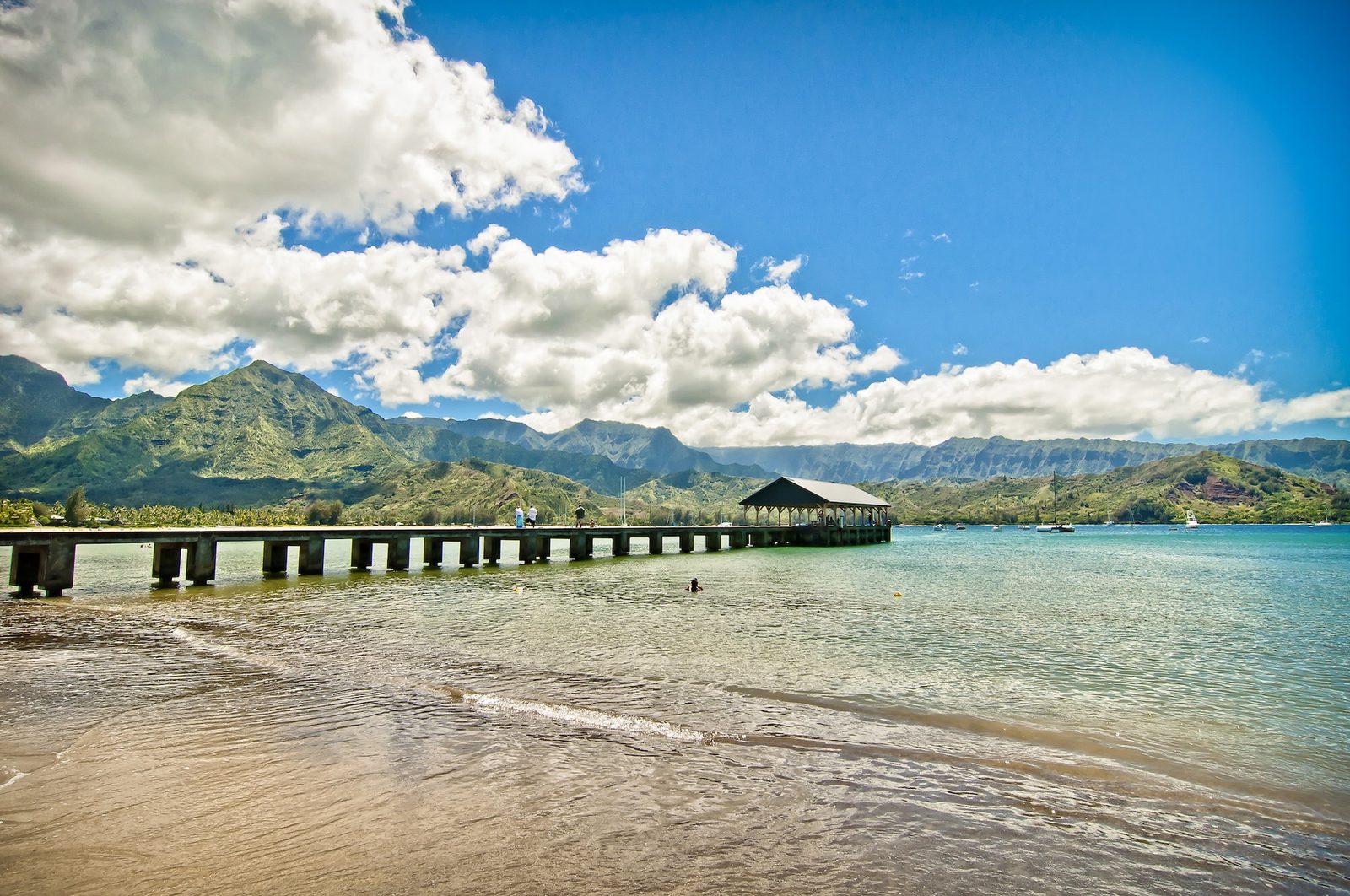
For buyers deciding where to focus their search, the north shore vs. south shore Kauaʻi question comes up early. Most buyers are already predisposed to one side before they realize it — the answer usually lives in how they vacation, what they value, and how they spend their time. A buyer who spent a week in Hanalei and hasn't stopped thinking about it is a North Shore buyer. A buyer who wants reliable sunshine and easy airport access is a South Shore buyer. They can look at both, but the pull is usually there from the start.
When buyers genuinely have no sense of which side they prefer, it typically means one of two things: they are not yet familiar enough with the island to have a real picture of what each side is actually like to own on, or they have not yet been realistic about what their day-to-day life here needs to look like. Both are worth sorting out before the search gets serious.
Here is what actually drives the decision.
What the North Shore vs. South Shore Kauaʻi Question Is Really Asking
People who own on this island will tell you: you are either a North Shore person or a South Shore person. Not both. The distinction runs deeper than weather or price — it is a lifestyle identity, shaped by how you want your days here to actually feel and what you need your property to do for you.
The North Shore is anchored by Hanalei, Princeville, and Kīlauea. The South Shore is centered on Poʻipū and Kōloa. Everything else — commute, golf, services, rental rules, price — flows from which of these worlds fits the life you are building here.
The North Shore: What Buyers Are Actually Choosing
Princeville is the North Shore's largest planned community — and it will feel familiar to buyers who have owned in master-planned communities on the mainland. The HOA structure, walking paths, neighborhood organization, and range of property types from condos to single-family homes track with what many buyers already know. What sets it apart is the setting: Princeville sits on a hilltop ridge with sweeping North Shore views. Beach access requires getting in the car or navigating the cliffside — this is not a walk-to-the-sand community. Entry pricing in Princeville as of April 2026 runs around $800,000 for a condo and $1.3 million for a home. A meaningful portion of the community falls within Kauaʻi's VDA zone, making short-term rental a viable option for many properties. And at the other end of the range, the North Shore is home to some of the most significant legacy estates in the state — $20 to $30 million properties that trade regularly and quietly. Buyers at this level know exactly what they are buying. The distance from Līhuʻe is not a concern to them — it is part of the appeal.
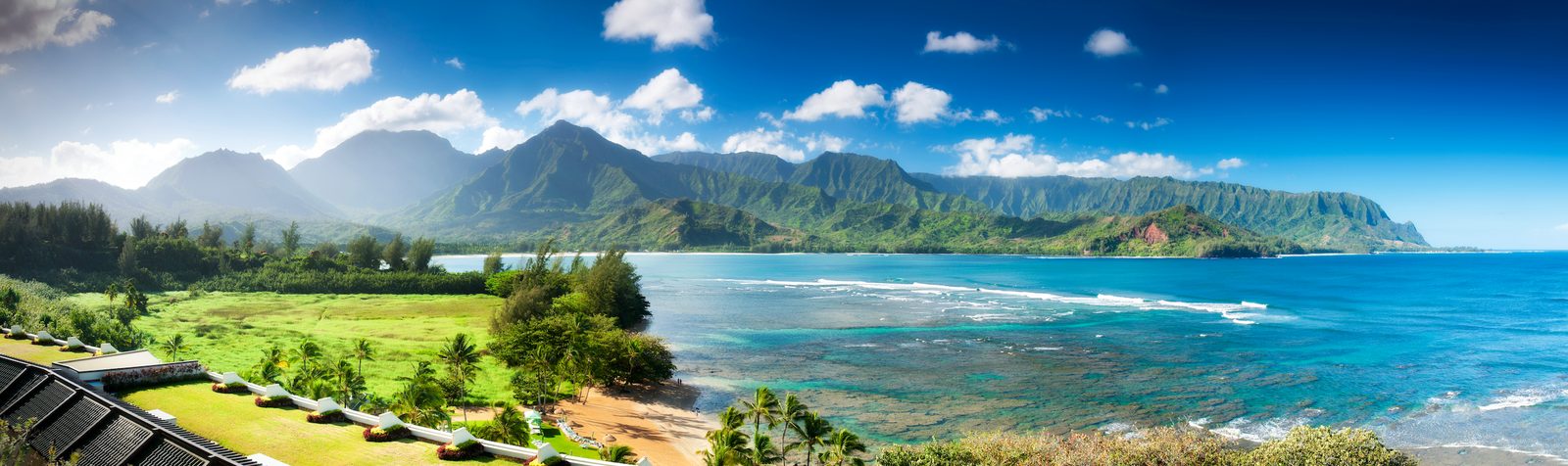
Beyond Princeville, Kīlauea and Hanalei have a different character — smaller, more rooted, with a community that has deliberately resisted the resort economy. There are no chain restaurants on the North Shore. The shops are independently owned. The farmers markets feel like community events rather than tourist attractions. Buyers who choose this part of the island are not looking for convenience — they are looking for a specific kind of life, and they know it when they find it.
Hanalei Bay is one of the most recognized stretches of coastline in the world — home to surf breaks that draw surfers from across the Pacific, a backdrop that has appeared in more photographs than most people can count, and a protected bay that serves as a summer anchorage for boaters from across the Pacific. In winter, the North Shore's swells draw surfers who come specifically for this stretch of coast, and for buyers whose lives are organized around the water, the north shore vs. south shore Kauaʻi question practically answers itself.

One important note for buyers considering Hanalei or Kīlauea specifically: both areas fall outside Kauaʻi's Visitor Destination Area (VDA) zones. That means short-term rental is not permitted on most properties there without a grandfathered TVR permit — which the county stopped issuing in 2008. Buyers looking to purchase in these areas with rental income in mind need to verify TVR permit status carefully before making an offer. Princeville, by contrast, has VDA-zoned areas where short-term rental is a permitted use for most properties.
The North Shore also serves as the gateway to the island's most dramatic natural landscapes. Haʻena State Park, the Nā Pali Coast, and Keʻe Beach are accessible from here in a way they simply are not from the south. For buyers who will spend their weekends hiking, paddling, surfing, or on the water, the North Shore's proximity to these places is the primary value proposition.
Golf: The North Shore has two courses. Princeville Makai Golf Club is the public option, running along the cliffs above Hanalei Bay with ocean views throughout. North Shore Preserve is private — a members-only course for residents and guests of the Preserve community.
Services are limited. The North Shore has a Foodland in Princeville, a handful of local shops and restaurants, and not much else. For the hospital, Costco, Home Depot, Target, or the airport, the drive to Līhuʻe is required — on a single two-lane road that can take 45 minutes to an hour under normal conditions and significantly longer after rain events or during peak traffic periods.
Climate and road access. The North Shore receives 60 to 80 inches of rainfall annually — roughly double the South Shore — which is what gives it the dramatic green landscape, but also what drives the road closures buyers need to plan around. The bridge from Princeville and Hanalei is closed during heavy rain events and has been closed for extended periods following major storms. Properties beyond Hanalei — including some of the island's most sought-after oceanfront parcels — carry a road-access consideration that buyers should understand before committing.
The South Shore: What Buyers Are Actually Choosing
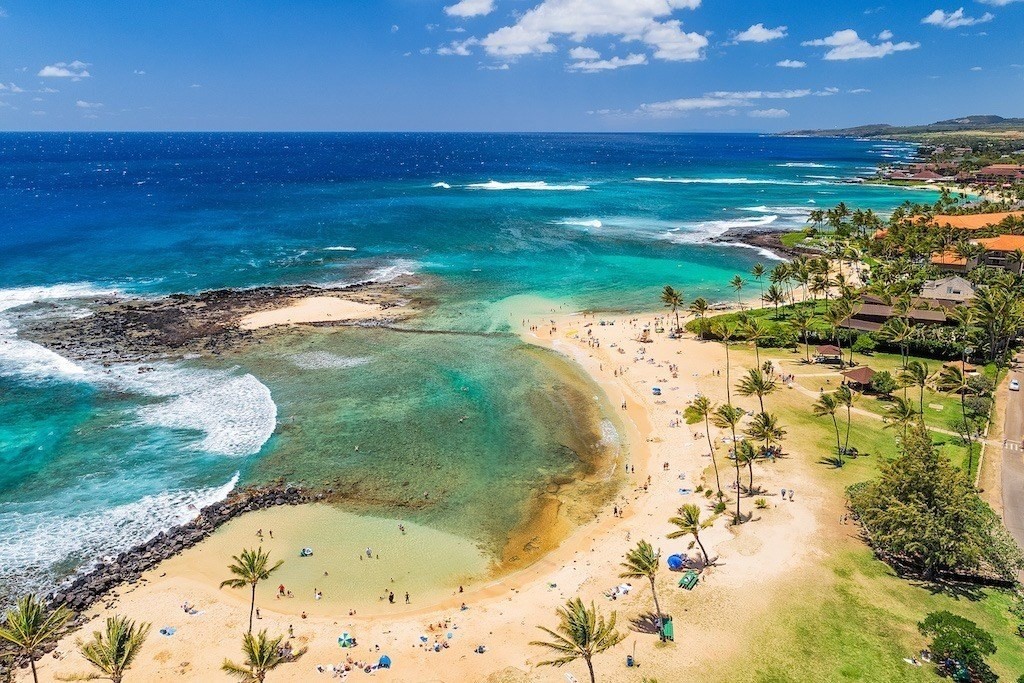
The South Shore receives significantly less rainfall than the North Shore. The South Shore averages 30 to 40 inches of rainfall annually; the North Shore averages 60 to 80 inches, according to the University of Hawaiʻi at Mānoa. That difference is visible on the ground — the South Shore's beaches are reliably accessible and consistently sunny for most of the year. That consistency is a real advantage for buyers who want to use the water year-round, not just when the weather cooperates.
Poʻipū and Kōloa have a more resort-oriented character. The Grand Hyatt, Kukuiʻula, Poʻipū Shopping Village, and a broader range of dining and amenities are concentrated here. The South Shore is 20 to 30 minutes from Līhuʻe — not a trivial difference from the North Shore's 45 to 60. And while Kauaʻi's single road means weather can affect travel island-wide, the South Shore does not have the bridge closure issue that can cut off access north of Hanalei entirely.
Golf: The South Shore has four courses — three public and one private. Poipu Bay Golf Course is the most recognized, having hosted the PGA Grand Slam of Golf from 1994 to 2006. Kiahuna Golf Club is a full 18-hole layout and one of the shorter courses on the island. Kukuiolono Golf Course in Kalaheʻo is a walkable nine-hole course — more relaxed in character than the resort-facing options, but well-loved and accessible. Kukuiʻula is the private option, a members-only club within one of the South Shore's most established resort communities. Buyers for whom regular golf access is non-negotiable will find more variety here than anywhere else on the island.
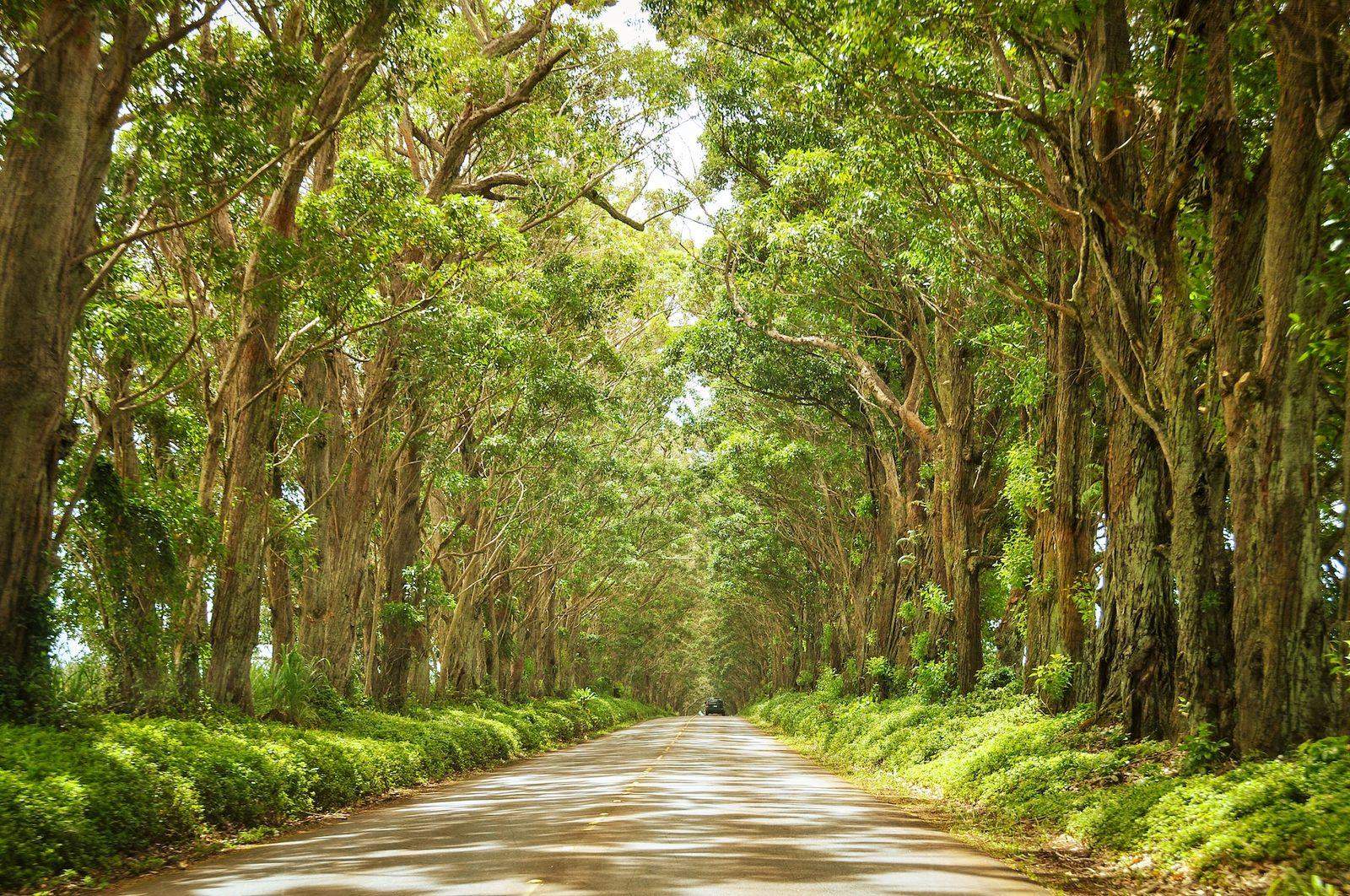
The tree tunnel. Accessing the South Shore from Līhuʻe means passing through the tree tunnel — a single tree-lined corridor that backs up during peak periods. It is less consequential than the North Shore's road situation, but it is real, and South Shore buyers heading into town during morning commute hours or after major events will encounter it regularly.
On condos and leasehold ownership: Poʻipū has a meaningful number of leasehold condos in its market. This is not a trap buyers stumble into — it is the explanation for price. When a South Shore condo appears priced noticeably below comparable units in the same complex or area, leasehold status is frequently the reason. Leasehold means the buyer owns the structure but pays ongoing ground rent to a separate landowner, and the implications for financing, carrying cost, and resale are significant. Confirm fee-simple vs. leasehold status on any Poʻipū condo before analyzing it on price alone. For a detailed breakdown of how leasehold works in Hawaiʻi, see the overview in What Makes Kauaʻi Real Estate More Complex Than Most Markets.
When a South Shore condo is priced noticeably below comparable units, leasehold ownership is usually the explanation — not a bargain. Confirm fee-simple vs. leasehold status before analyzing price.
The Commute Factor Most North Shore Buyers Underestimate
The single thing buyers most consistently underestimate about the North Shore is the drive to Līhuʻe. The county seat — where the island's only hospital, Costco, Target, Home Depot, and the airport are located — sits roughly 30 miles from Princeville on a single two-lane road. Under normal conditions, that is 45 minutes. After a rain event, road closure, or during holiday traffic, it can be considerably longer.
For buyers who will make that drive frequently — for regular work travel, medical care, or weekly errands — the North Shore's distance from services is a practical constraint that does not appear on any listing sheet. It is worth running a realistic scenario: how many times a week would you need to be in Līhuʻe? What does that look like in year three, not week one?
North Shore owners who have made peace with this trade-off — or who have designed their lives so that town trips are occasional rather than routine — tend to see the distance as part of what makes the North Shore worth owning. Grocery delivery services are available and widely used. The remoteness is, for many buyers, exactly the point.
For buyers still weighing whether timing and budget support a Kauaʻi purchase at all, the broader market context in Is Now a Good Time to Buy on Kauaʻi is worth reading alongside this.
Price Differences Between the North Shore and South Shore
Single-family homes on the North Shore — particularly in Hanalei and the Kīlauea corridor — tend to carry a premium over comparable South Shore properties. The combination of lifestyle appeal, limited inventory, and access to the Nā Pali Coast supports pricing that reflects the premium buyers are willing to pay to be on that side of the island. Princeville offers a wider range of entry points across condos and single-family homes, with the higher end concentrated in oceanview and ridgeline properties.
The South Shore condo market is larger and more varied. As of April 2026, leasehold condos in Poʻipū range from roughly $265,000 to $745,000; fee-simple condos run $700,000 to $3 million. Single-family homes start around $1.7 million and climb to the $6–14 million range as you move into Kukuiʻula, with oceanfront properties reaching $30 million. The variance within the Poʻipū condo market is wide enough that buyers who are not paying attention to leasehold status can easily misread what they are comparing — a leasehold unit priced at $400,000 is not a bargain relative to a fee-simple unit at $900,000; they are different ownership structures entirely.
For current inventory and pricing by area, browsing active listings is the most direct way to calibrate. Published market medians lag by months; what is actually available and what it is trading for today is more useful than any backward-looking average.
Choosing Between the North Shore and South Shore Kauaʻi: A Practical Framework
The north shore vs. south shore Kauaʻi decision ultimately comes down to what daily life will actually look like on the island — not what a vacation felt like.
If frequent trips into Līhuʻe are part of your regular routine — for work travel, medical appointments, or regular errands — the South Shore's proximity is a meaningful daily advantage. The drive is shorter, the road more reliable, and the access to services more consistent.
If your schedule is flexible and town trips would be occasional rather than routine, the North Shore's trade-offs shrink considerably. Many North Shore owners structure their Līhuʻe runs as a once-a-week errand day and find the rhythm works well. The distance that feels significant in the abstract becomes manageable in practice when it is planned for rather than fought against.
If surfing, boating on Hanalei Bay, or regular access to the Nā Pali Coast is central to the reason you are buying here, the North Shore is not just one option among several — it is the address. No amount of South Shore sunshine compensates for a 90-minute round trip to the North Shore every weekend.
If year-round beach accessibility, resort amenities, and close proximity to services and the airport are the priorities, the South Shore delivers those consistently and reliably in a way the North Shore, with its heavier rainfall and winter swells, does not.
Neither shore is the better answer. Each is the right answer for a specific kind of buyer — and the wrong answer for the other kind.
Not Sure Which Shore Fits Your Search?
Whether you're still narrowing your focus or ready to see what's available, the neighborhoods, price points, and trade-offs on both shores are worth a conversation.
Browse Kauaʻi Listings