If you've been sitting on the decision to sell, the 2025 data gives you a clear picture of where the market stands — and what it's asking of sellers who want results. Inventory is up, buyers have more options, and the era of listing a home and waiting for multiple offers has passed. But that doesn't mean the market is soft. It means the bar for pricing and preparation has been raised.
Here's what the numbers actually show — and what they mean if you're considering selling on Kauaʻi in 2026.
Has the Kauaʻi Real Estate Market Dropped?
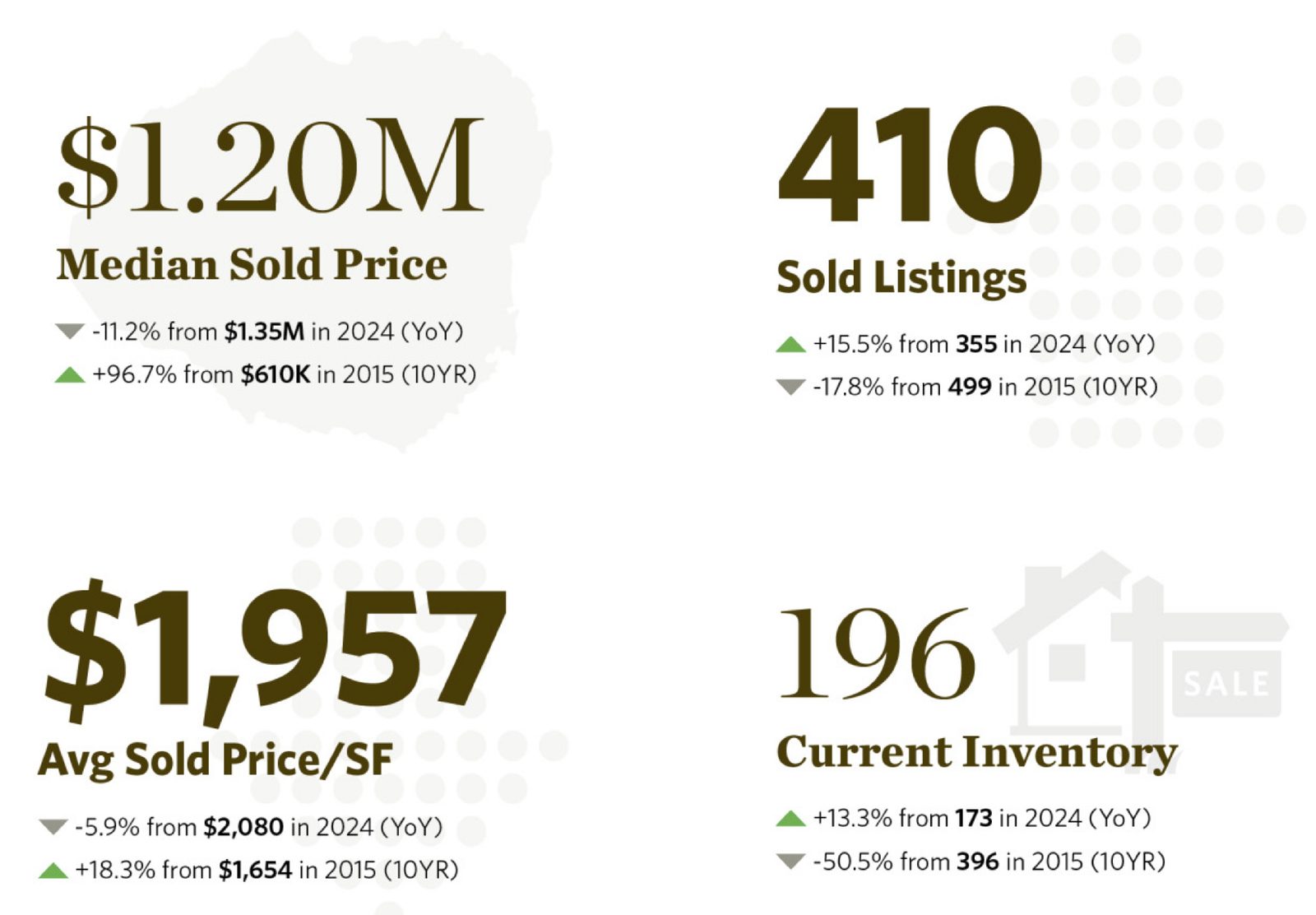
Yes — but the correction is a recalibration, not a collapse. The median sold price for a Kauaʻi single-family home finished 2025 at $1,200,000 — down 11.2% from $1,351,000 in 2024. That sounds significant until you consider the longer view. In 2015, the median was $610,000. That's a 96.7% increase over a decade. The 2025 adjustment is a recalibration after years of compressed inventory and pandemic-era premiums — not a reversal of what makes Kauaʻi real estate valuable.
Active listings rose 13.3% to 196 homes, giving buyers more to choose from than they've had in years. That shift matters if you're selling on Kauaʻi in 2026. Your home is now competing against a broader set of options, and buyers — many of whom are experienced, well-researched, and unhurried — are comparing carefully before committing. The sellers who thrived in 2025 understood this and priced accordingly.
Why Pricing Strategy Is Everything When Selling on Kauaʻi in 2026
Here is the most important data point for sellers in 2025: the average days on market dropped 11.2% to 79 days. In a year when inventory was rising and median prices were pulling back, well-priced homes actually sold faster. That is not a contradiction — it is the market working exactly as it should.
What it means in practice: homes priced to reflect current conditions attracted qualified buyers and moved. Homes priced to 2022 or 2023 peak expectations sat, accumulated days on market, and often required reductions that made buyers wonder what was wrong. In a market with 196 active listings, an overpriced home is not just slow — it becomes invisible to buyers who would otherwise have been genuinely interested.
The sellers who did best in 2025 weren't the ones who held firm on yesterday's prices. They were the ones who understood what today's buyers are willing to pay — and priced there on day one.
Pricing is not about what you need from the sale or what the home was worth at the 2022 peak. It is about what a motivated, qualified buyer will pay given everything else available to them right now. Getting that number right — using current comparable sales, not aspirational ones — is the first and most consequential decision a seller makes.
Who Is Buying Homes on Kauaʻi?
Out-of-state buyers account for more than half of all condo transactions and between 21% and 36% of single-family home sales on the Neighbor Islands. Understanding your buyer changes how you position your property. On the Neighbor Islands, out-of-state buyers account for more than half of all condo transactions and between 21% and 36% of single-family home sales. These are buyers who have researched the market from thousands of miles away, often for months or years. They know the comparable sales. They've watched price reductions. They are not going to overpay — but they will pay full price quickly when a property is accurately priced and well-presented.
In Princeville and Kōloa specifically, roughly 60% of all housing transactions go to out-of-state buyers. If your home is in either of these markets, your marketing needs to work as hard online as it does in person — because the buyer who purchases your home may not visit until after they are under contract. Professional photography, a compelling digital presence, and clear disclosure of key details upfront are not optional at this price point. They are the product.
Should Sellers in Princeville and Kōloa Lead with Investment Value?
If you're selling in Princeville or Kōloa and you're located in the Visitor Destination Area (VDA), the investment angle is a genuine asset in your marketing — and it is worth leading with it. According to the UHERO Hawaiʻi Housing Factbook 2025 (p. 17), 80% of the housing stock in Princeville and 51% in Kōloa are operating as vacation rental properties — among the highest concentrations in the state. Roughly 60% of housing transactions in both zip codes go to out-of-state buyers. Buyers in these markets are frequently evaluating income potential alongside lifestyle — and they are doing the math.
Kauaʻi rent growth has been 51% faster than the state average (UHERO Hawaiʻi Housing Factbook 2025, p. 9), which strengthens the investment case for buyers who are weighing the long-term economics of ownership here. If your property has an active vacation rental history — or the zoning and permit status to operate as one — that data belongs in your marketing materials, stated clearly and specifically. Vague references to "rental potential" do not move buyers the same way that actual permit numbers and historical income figures do.
For context on the structural supply dynamics that keep demand strong in these markets, see our analysis of why Kauaʻi's housing inventory has fallen 50% over the past decade.
Selling in the $3M+ Tier: Patience, Precision, and Presentation
The Kauaʻi luxury market has its own set of rules, and sellers at this tier need a fundamentally different approach. In 2025, 66 homes priced at $3 million or more sold island-wide — up 8.2% from 2024 — but the average days on market was 128 days. Luxury buyers at this price point are deliberate and selective. They are typically waiting for the right property, not the right moment.
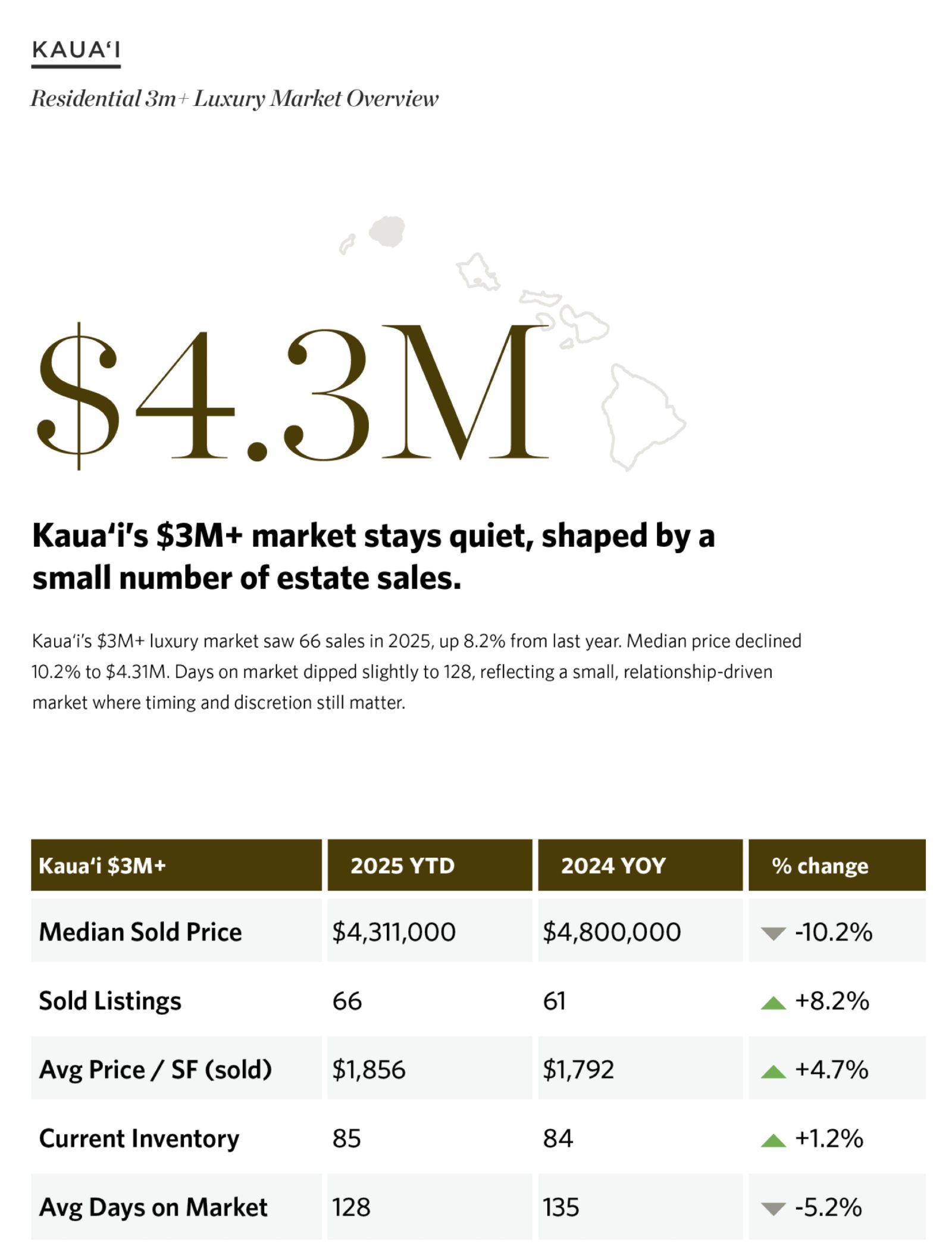
The median sold price in the luxury segment came in at $4,311,000 — down 10.2% from 2024 — but average price per square foot actually increased 3.6% to $1,856. The median shift reflects mix, not devaluation: more transactions at the lower end of the luxury range in 2025. Well-positioned properties at the $3M+ tier are still finding the right buyers. They require discretion, accurate pricing, and a level of presentation that matches the expectations of buyers making decisions at this scale.
Homes at similar price points in the luxury segment vary dramatically by style, condition, setting, and finish — which means buyer pools are narrower and more specific than in the broader market. The highest-value outcome for a luxury seller comes from reaching the right buyer, not the most buyers. For a full picture of what is driving activity at this tier, see the Kauaʻi luxury market 2025 analysis.
The Bottom Line for Selling on Kauaʻi in 2026
The Kauaʻi market rewards sellers who approach it honestly. The long-term appreciation story is intact — nearly 97% over the past decade for single-family homes. But the market is no longer forgiving of overpricing, deferred maintenance, or presentation that does not match the asking price. Buyers have options, they know the comps, and they are willing to wait for a property that makes sense to them.
What produces the best seller outcome right now: accurate pricing from day one, presentation that minimizes buyer objections before they form, and — especially for the out-of-state buyers who make up such a large share of transactions — marketing that works as hard digitally as it does in a showing. Knowing who your buyer is and speaking directly to what they are evaluating is what separates a clean, well-priced sale from a long wait and an eventual reduction.
The fundamentals of this island have not changed. Kauaʻi is geographically constrained, structurally undersupplied, and consistently in demand from a pool of buyers who are not going anywhere. The sellers who are positioned well for this market are the ones who understand that — and price accordingly.
What Is Your Kauaʻi Home Worth Right Now?
See an instant estimate based on current sales in your neighborhood — then reach out to talk through what it means for your timing.
Get an Instant Home Value Estimate